
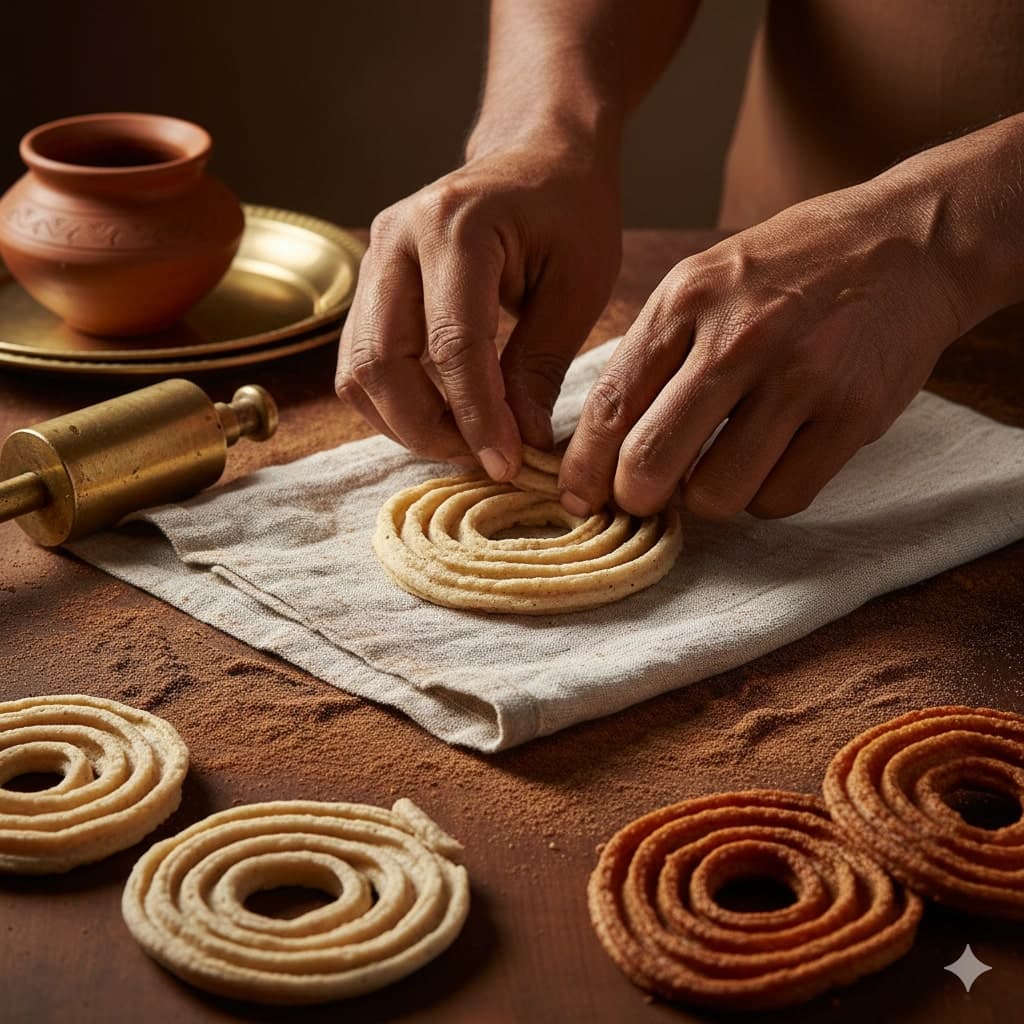
Ragi Murukku: Spiral Crunch, Village Fritters, and Hand-Pressed Technique
Key highlights
- Murukku is a celebration of texture.
- The spiral shape traps frying steam and creates crisp ridges that make every bite sing.
- While many associate murukku with festival snacks, its roots are also humble—offered as temple bhog, packed for long journeys, and fried in communal kitchens.
Murukku is a celebration of texture. The spiral shape traps frying steam and creates crisp ridges that make every bite sing. While many associate murukku with festival snacks, its roots are also humble—offered as temple bhog, packed for long journeys, and fried in communal kitchens.
What sets a handcrafted ragi murukku apart:
- Dough hydration: Slightly dryer than wheat-based variants so ragi retains a clean crunch.
- Oil choice: Cold-pressed sesame oil adds a toasty background without the heavy mouthfeel of refined oils.
- Press technique: We trained with roadside vendors who learned to keep pressure consistent so the spiral cooks evenly.
Cultural note
In the Konkan belt, murukku-style spirals were wrapped in plantain sheath and given to fishermen before long nights on the sea. The shape prevented crumbling and the ragi's slow carbs steadied energy.
Modern pantry use
Great with evening tea, travel rations, or as a crunchy topping to salads. Because it's savory and low on added sugar, it pairs well with chutneys and spiced buttermilk.
Share this wisdom
Sojal Dalvi
Founder, Sattvahar Foods
Sojal writes about satvic living, traditional grain wisdom, and the future of conscious eating. Every recipe and essay is crafted from lived experience in the Sattvahar kitchen.
Get Weekly Wellness Insights
Short essays, seasonal routines, and satvic rituals from Sojal—delivered every Sunday.