
Ragi Is the Satvik Superfood India Forgot (And How to Welcome It Back)
Key highlights
- A memory: my aunt packed ragi laddoos into my schoolbag, wrapped in waxed paper, with a note that read simply 'for strength.' Decades later I realized strength meant calcium for bones, slow energy for tests, and a quiet appetite that didn't spike into tantrums.
- Ragi is a living archive—of soil, of seed, of labour.
- It thrives where water is scarce and soil thin; it asks little and returns a lot.
A memory: my aunt packed ragi laddoos into my schoolbag, wrapped in waxed paper, with a note that read simply 'for strength.' Decades later I realized strength meant calcium for bones, slow energy for tests, and a quiet appetite that didn't spike into tantrums.
Ragi is a living archive—of soil, of seed, of labour. It thrives where water is scarce and soil thin; it asks little and returns a lot. For families across peninsular India, ragi was daily insurance against famine, a portable snack for field hands, and the backbone of children's growth.
Why it feels satvik
- Low-glycemic, slow-release carbohydrates that steady energy rather than spike it.
- Naturally high in calcium and magnesium—true 'bone food' for women and children.
- Stone milling keeps the germ and oils intact, giving deeper aroma and a fuller nutrient profile than industrial flours.
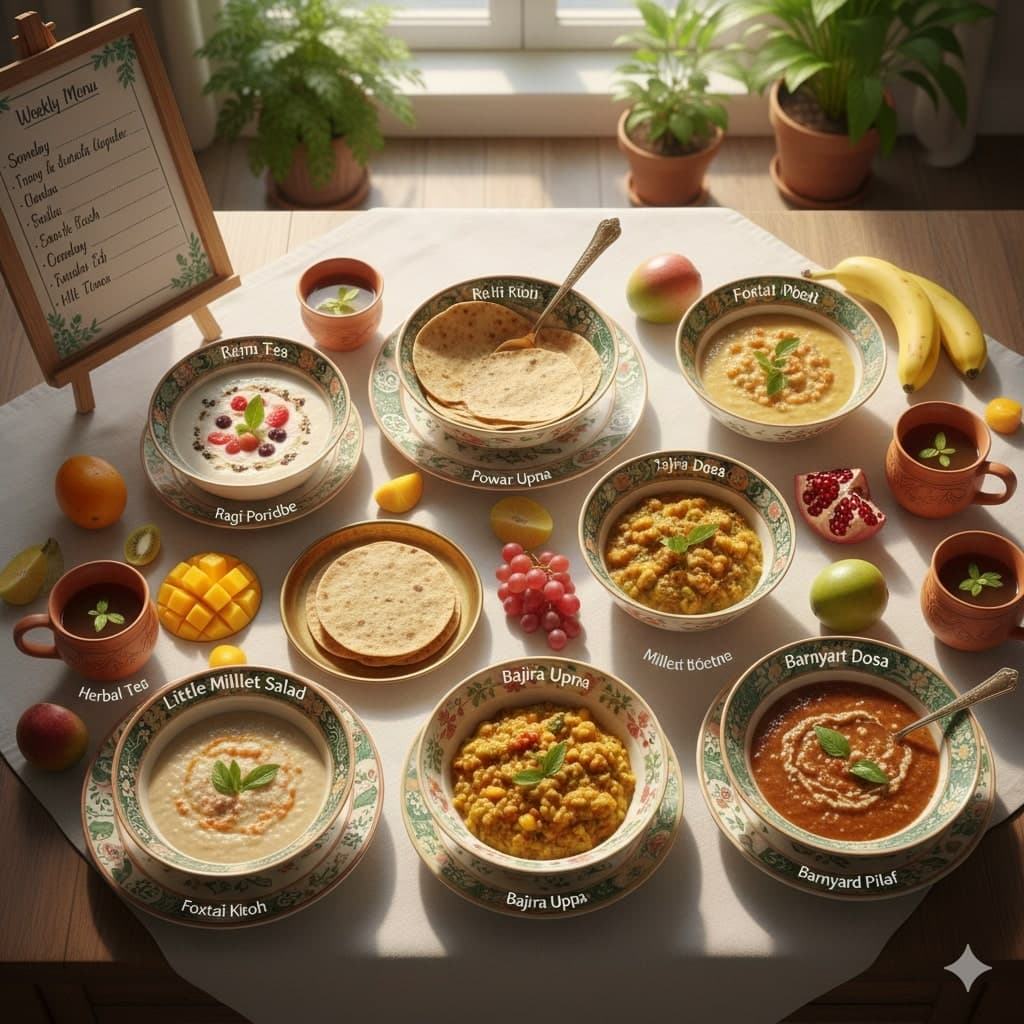
A taste note Warm ragi porridge has a deep, toasted-sesame aroma and a faint floral finish when roasted correctly. The texture is gently grainy—comforting rather than creamy—and pairs beautifully with jaggery and warm milk.
Practical revival moves
- Start mixed: use a 30/70 ragi-wheat blend for chapatis to train palates.
- Keep one ritual: a weekly laddoo or porridge that family members recognize as 'strength food.'
- Rotate grains: let ragi be part of a broader millet practice—not the only grain but a reliable one.
Why now Choosing ragi is both personal and political: it supports farmers who steward diverse seeds, it reduces pressure on water systems, and it restores a food culture attuned to seasons and bodies. The grain remembers how to nourish. We only need to bring it back to the table.
Share this wisdom
Sojal Dalvi
Founder, Sattvahar Foods
Sojal writes about satvic living, traditional grain wisdom, and the future of conscious eating. Every recipe and essay is crafted from lived experience in the Sattvahar kitchen.
Get Weekly Wellness Insights
Short essays, seasonal routines, and satvic rituals from Sojal—delivered every Sunday.