
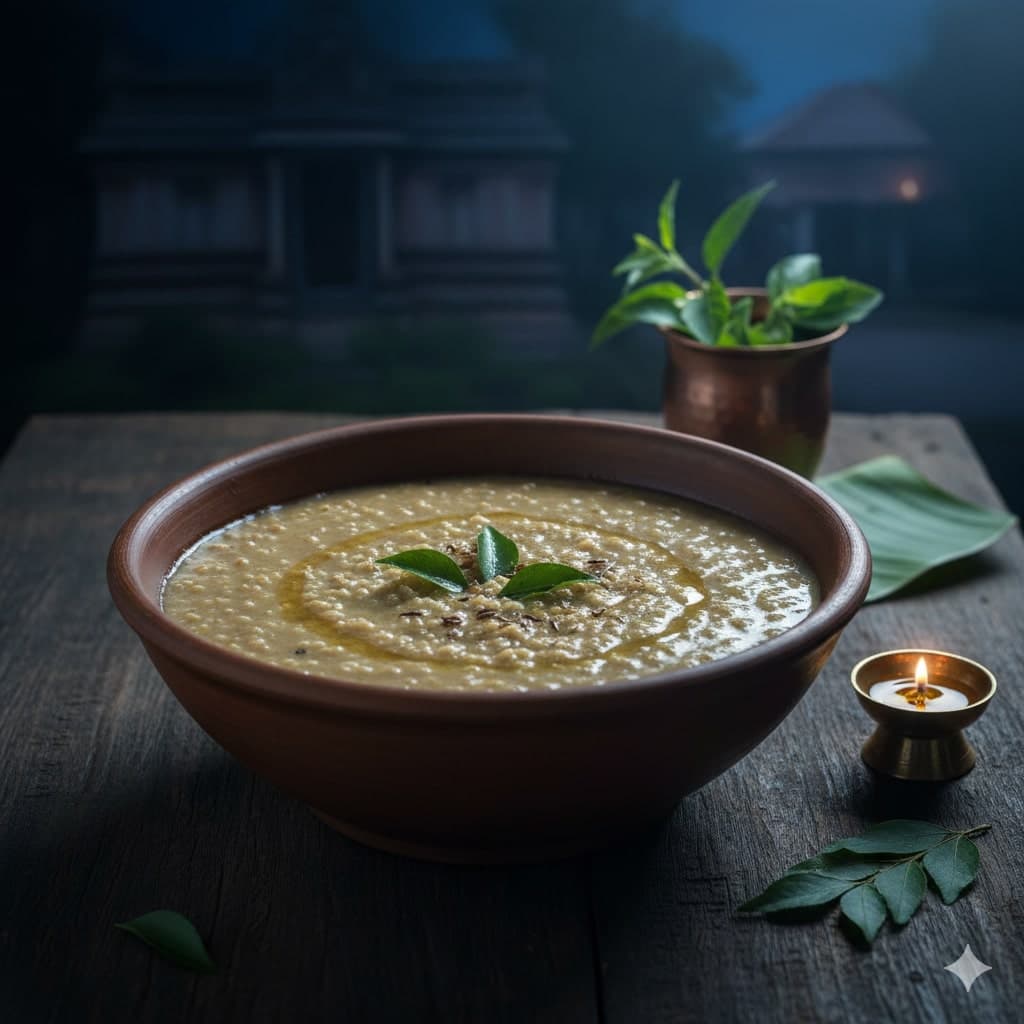
Rare ingredient story
- Wild kodo millet: Grass once grown between temple tanks; now nearly extinct due to eucalyptus plantations.
- Sourcing: Partner farms near Chamarajanagar intercrop kodo with pigeon pea to maintain soil cover.
- Preservation: Pottery-lined storage prevents weevils without chemicals.
The sacred method
- Vessel: Porous clay handi smeared with turmeric
- Fire: Areca husk embers
- Timing cue: Ferment exactly 32 hours
- Surface must show tiny moons of bubbles.
- A thread dropped in should float for 3 seconds, then sink.
Ayurvedic & seasonal wisdom
- Dosha focus: Cools pitta, gently stimulates agni
- Benefits: Probiotic-rich, magnesium-dense drink prevents fainting during long chants.
- Consumption notes: Sip 1 katori at midnight with crushed curry leaf salt.
Sojal's revival notes
- Clay pot residency:We commissioned potters to recreate high-porosity handis so ferments breathe.
- Microbial mapping:Each batch tested for lactic strains; results shared with fermentation researchers.
Ingredients
- 1 cup kodo millet
- 6 cups water
- 1/4 cup buttermilk
- Handful of curry leaves
- 1 tsp rock salt
- 1 tsp roasted cumin
- 2 crushed green chilies (optional)
Method
- Rinse millet thrice, soak 4 hours, drain.
- Slow simmer with water until grains bloom but stay intact.
- Cool to body temperature, stir in buttermilk, pour into clay pot.
- Cover with muslin, keep in dark corner for 32 hours.
- Whisk vigorously, season with salt, cumin, torn curry leaves; serve cool.
Preservation actions
More to explore
Related lineages

Lost Temple Secrets
Madurai Meenakshi Midnight Panakam
Past midnight, panakam urns rest beneath the gopuram so lunar dew can temper jaggery heat.
Read recipe ↗
Lost Temple Secrets
Badrinath High-Altitude Jhangora Kheer
Altitude dictates patience—the kheer must bubble before sunrise when air pressure drops just enough to aerate the grains.
Read recipe ↗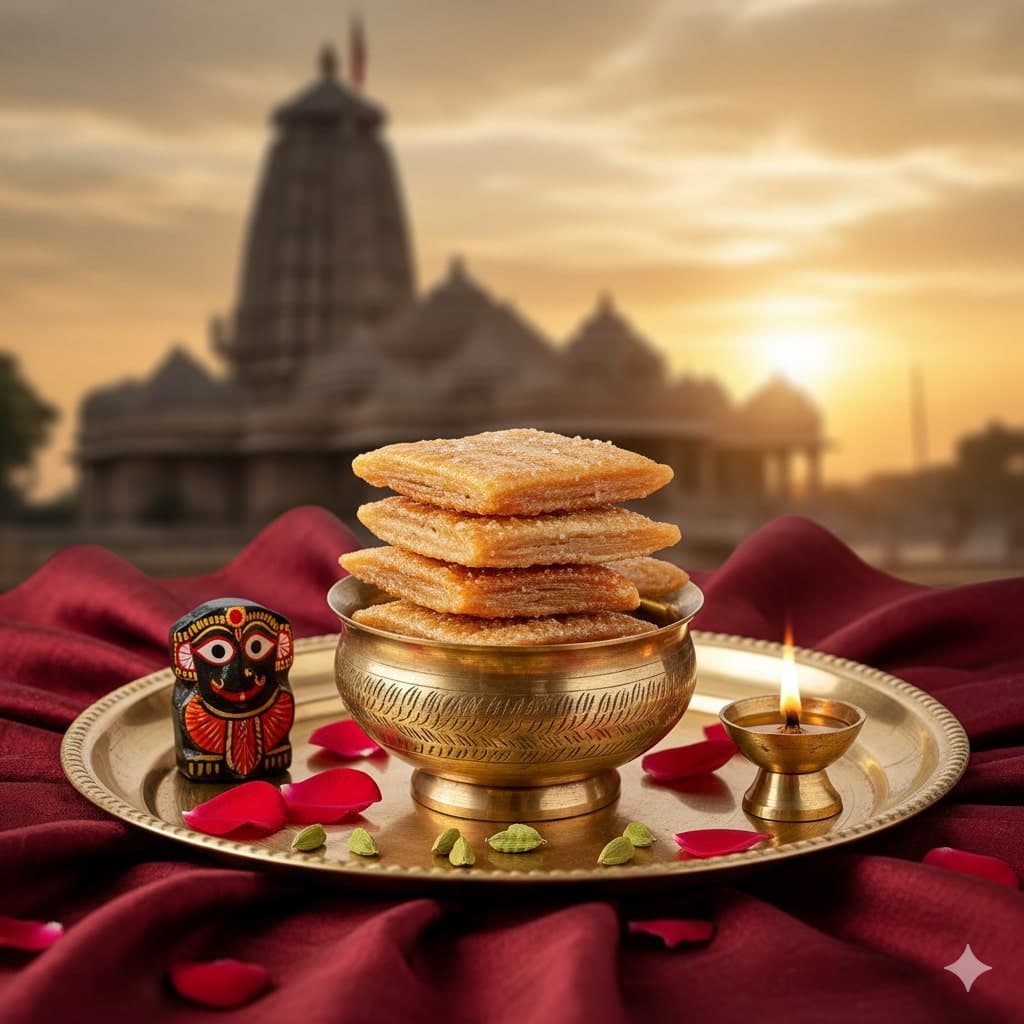
Lost Temple Secrets
Puri Jagannath 56-Layer Khaja
Each fold is sealed with a whispered mantra so the layers don't collapse in steam.
Read recipe ↗